 跳到内容
跳到内容 
For cosmetic brands operating across Europe, North America, and Southeast Asia, choosing the right manufacturing model is a critical decision in product development. The two most common sourcing approaches—OEM (Original Equipment Manufacturing) and ODM (Original Design Manufacturing)—define how a product moves from concept to market.
Understanding the difference between these two models helps brands optimize cost, speed, and long-term competitiveness in the global beauty industry.
📌 What is OEM vs ODM cosmetic packaging?
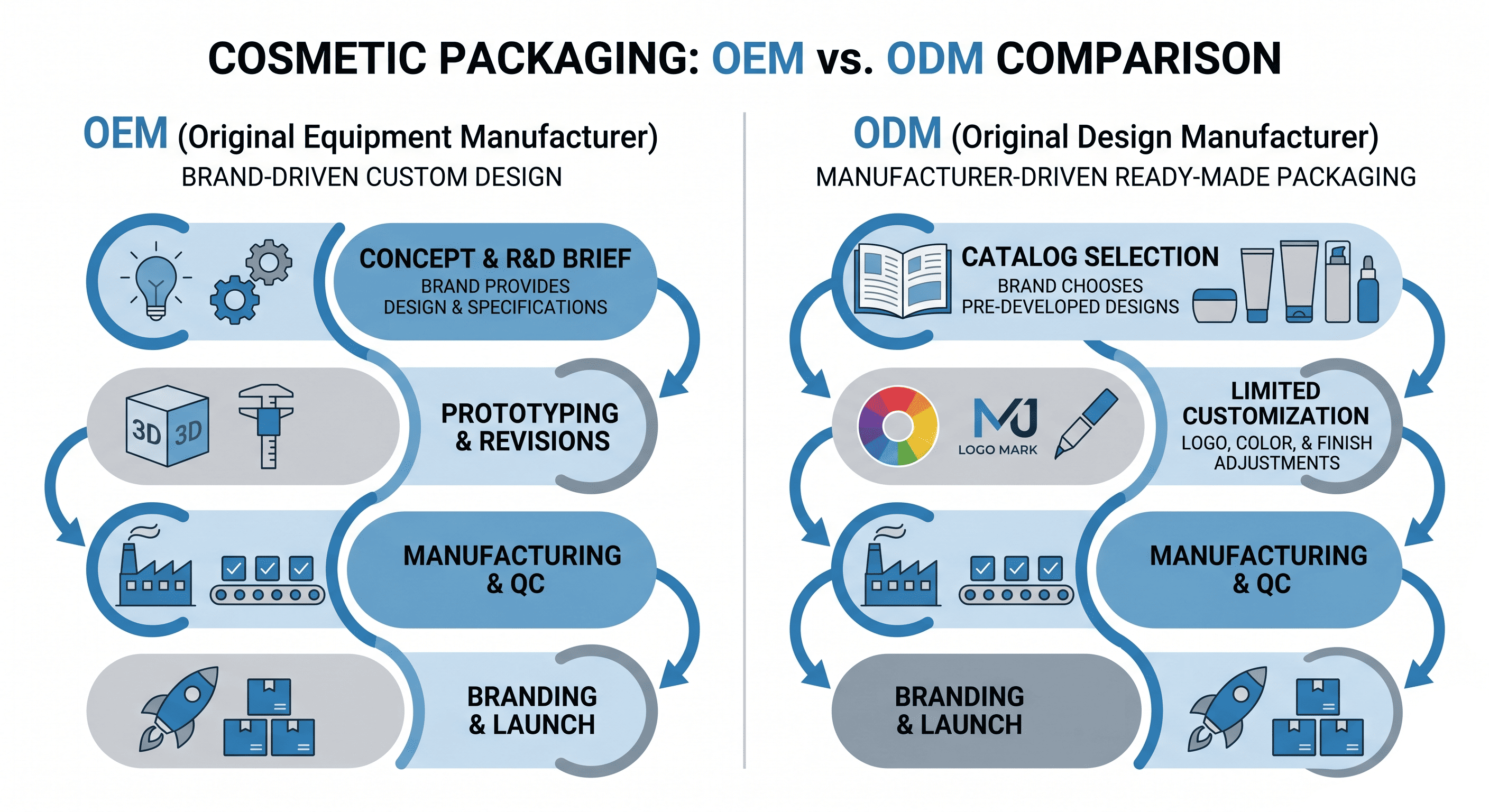
OEM and ODM refer to two different manufacturing structures used in cosmetic packaging production.- OEM: The brand provides full design specifications, and the manufacturer produces accordingly
- ODM: The manufacturer provides existing designs, and the brand customizes branding elements
👉 Both models are widely used in cosmetic packaging depending on brand strategy and development stage.
OEM vs ODM cosmetic packaging difference:
- OEM: Brand controls design, manufacturer produces custom molds
- ODM: Manufacturer provides ready-made designs for branding
- OEM offers high exclusivity but higher cost and longer lead time
- ODM offers faster launch with lower upfront investment
⚙️ What is OEM (Original Equipment Manufacturing)?
In an OEM model, the brand fully controls the packaging design and technical specifications. The manufacturer acts strictly as a production partner.
This includes defining:
- Structural dimensions
- Material selection
- Surface finishing requirements
- Functional design elements
Key characteristics of OEM:
- Full ownership of mold design
- High level of customization
- Suitable for premium or differentiated brands
OEM is often used when packaging is a core part of brand identity.
🧩 What is ODM (Original Design Manufacturing)?
ODM refers to a sourcing model where manufacturers provide pre-developed packaging structures.
Brands select from existing designs and apply branding modifications such as:
- Logo printing
- Color customization
- Surface finishing
Key characteristics of ODM:
- Faster production start
- Lower development cost
- Limited structural customization
ODM is commonly used for private label beauty sourcing.
🔗 External reference (authority support)
📊 OEM vs ODM comparison in cosmetic packaging
| Feature | OEM | ODM |
|---|---|---|
| Design ownership | Brand | Manufacturer |
| Upfront cost | High | Low |
| Time to market | 6–12 months | 1–3 months |
| Customization level | Full | Limited |
| Exclusivity | High | Moderate |
⚙️ When to choose OEM vs ODM
OEM is typically selected when:
- Brand requires unique packaging structure
- Long-term differentiation is a priority
- Intellectual property ownership is important
ODM is preferred when:
- Speed-to-market is critical
- Budget is limited
- Product testing or market entry is the priority
🧠 Hybrid manufacturing model (industry trend)
Many global brands are now adopting a hybrid sourcing strategy.
They may use:
- ODM for standard skincare lines
- OEM for hero or flagship products
This approach balances cost efficiency with brand differentiation.
How to choose between OEM and ODM cosmetic packaging:
- OEM is best for brands seeking exclusivity and full design control
- ODM is ideal for fast market entry and lower investment
- Hybrid models combine both approaches for flexibility
- The choice depends on budget, timeline, and brand positioning
❓ FAQ
What is the difference between OEM and ODM in cosmetic packaging?
OEM involves brand-controlled design and custom manufacturing, while ODM provides pre-designed packaging for branding customization.
Is OEM more expensive than ODM?
Yes. OEM requires mold development and customization, which increases upfront cost compared to ODM.
Which is faster, OEM or ODM?
ODM is faster because it uses existing packaging designs without requiring new mold development.
Can brands use both OEM and ODM?
Yes. Many brands use a hybrid model depending on product category and market strategy.
📦 Final CTA
At Omi Natural, we support both OEM and ODM cosmetic packaging solutions, helping global brands balance speed, cost, and differentiation.
👉 Contact our team to evaluate the best sourcing strategy for your next product launch.